– approx. 178,000 acres already prepared as farmers advance cultivation plans
Agriculture Minister, Hon. Zulfikar Mustapha, has assured rice farmers that adequate irrigation water is available to support land preparation and cultivation for the first crop of 2027, following a review of the country’s major irrigation systems with stakeholders from Regions Two, Three, Four, Five and Six.
Minister Mustapha said reports presented by stakeholders indicated that the irrigation systems are functioning satisfactorily, with sufficient water currently available to meet the demands of farmers.
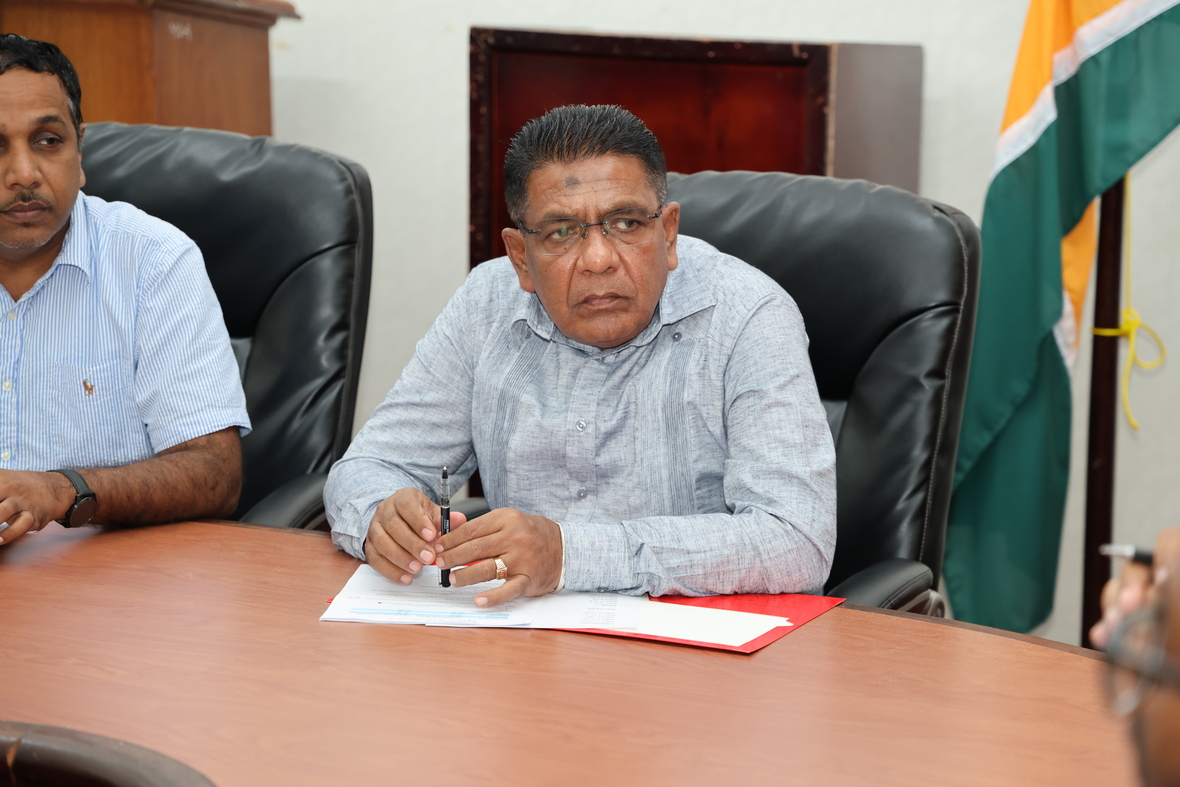
“I had a meeting with stakeholders from Regions Two, Three, Four, Five and Six to look at the irrigation systems and ensure that farmers have adequate water for the first crop. Based on the reports I’ve received, the systems are working well, and there is sufficient water available. I want to assure rice farmers who are preparing their lands that we have the necessary arrangements in place to provide irrigation water,” the Minister said.
He explained that the Ministry, through the National Drainage and Irrigation Authority (NDIA), continues to utilise several major irrigation systems to supply water to agricultural areas across the coastal regions.
In Region Two, pumps are being used to draw water from the Pomeroon River into the Dawa irrigation system, while farmers in Region Three are supplied through the Boerasirie Conservancy. The East Demerara Water Conservancy (EDWC) serves agricultural areas in Region Four, while the Abary system supports cultivation in Region Five.
In Region Six, water is being pumped from the Canje Creek into agricultural areas, with the recently activated Sandaka pump in the Upper Corentyne providing additional support to farmers.
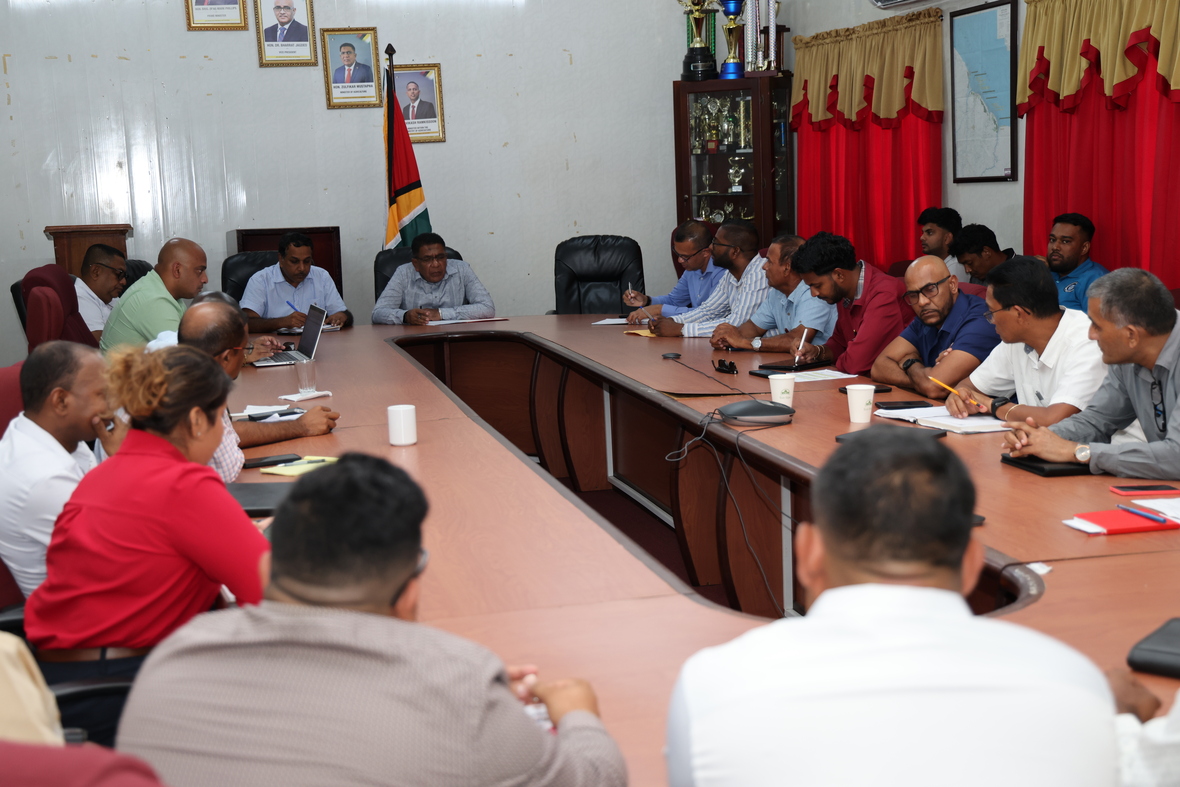
Minister Mustapha noted that maintaining adequate water levels in these systems is particularly important at this stage of the crop, as farmers across the regions are already making significant progress with land preparation.
Providing an update on the acreage prepared so far, the Minister disclosed that approximately 90,000 acres have been prepared in Region Five, while farmers in Region Six have completed preparation of some 50,000 acres.
In Region Three, approximately 26,000 acres of the targeted 32,000 acres have already been prepared, while in Region Two, farmers have completed land preparation on approximately 12,000 acres out of the targeted 13,000 acres.
“When we look at the amount of land that has already been prepared, it shows that farmers are serious about having a successful first crop in 2027. In Region Five, approximately 90,000 acres have been prepared; Region Six has about 50,000 acres; Region Three has 26,000 acres out of 32,000 acres, and in Region Two, 12,000 acres out of 13,000 acres have already been prepared. That is encouraging, and we want to ensure that the water is available so that farmers can continue their preparations without unnecessary delays,” Minister Mustapha stated.
The agriculture minister also emphasised the importance of close coordination among the agencies responsible for irrigation management and rice production, noting that arrangements have been established at the regional level to monitor water availability and respond to farmers’ concerns.
He explained that the NDIA and the Guyana Rice Development Board (GRDB) have been working closely with Water Users Associations (WUAs), Neighbourhood Democratic Councils (NDCs) and farmers to ensure that irrigation arrangements are properly coordinated.
According to Minister Mustapha, working committees have also been established in the various regions to monitor the irrigation systems daily and provide regular updates on water levels and distribution.
“We have been working closely with the Water Users Associations, the NDCs and the farmers. We have working committees in the different regions that monitor the situation daily, and I have been receiving reports from them. These arrangements are important because we want to know what is happening in each area and deal with any issues before they affect farmers,” he explained.
Minister Mustapha said the reports received so far have been encouraging and expressed confidence that the available water resources, together with the coordination mechanisms established across the regions, will allow farmers to cultivate their lands as planned.
“At this point, we have adequate water in the systems. The farmers have already started preparing their lands, and we will continue to monitor the situation closely to ensure that they have the irrigation water needed for a full crop in 2027,” he added.
Chairman of the National Drainage and Irrigation Authority (NDIA), Lionel Wordsworth, was also present at the meeting.