– highlights major investments to expand agricultural production and strengthen food security
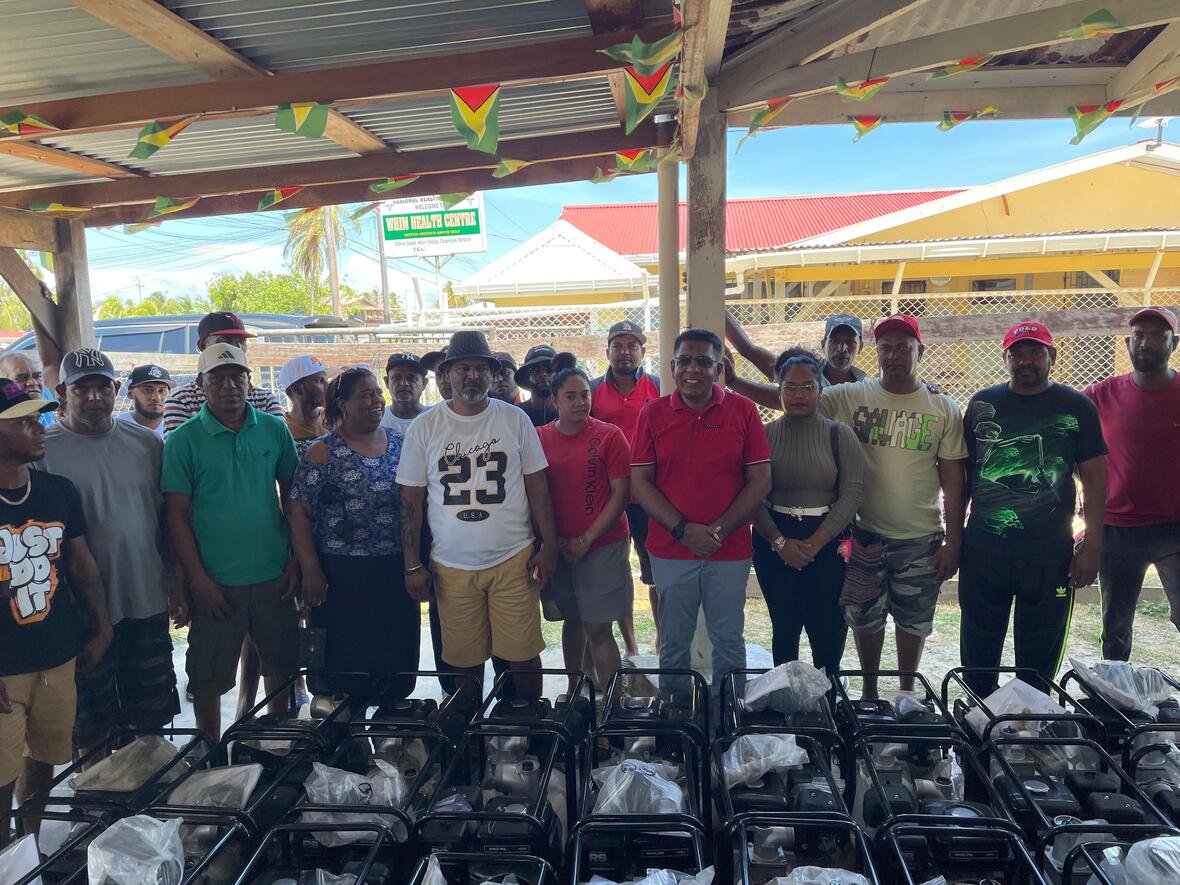
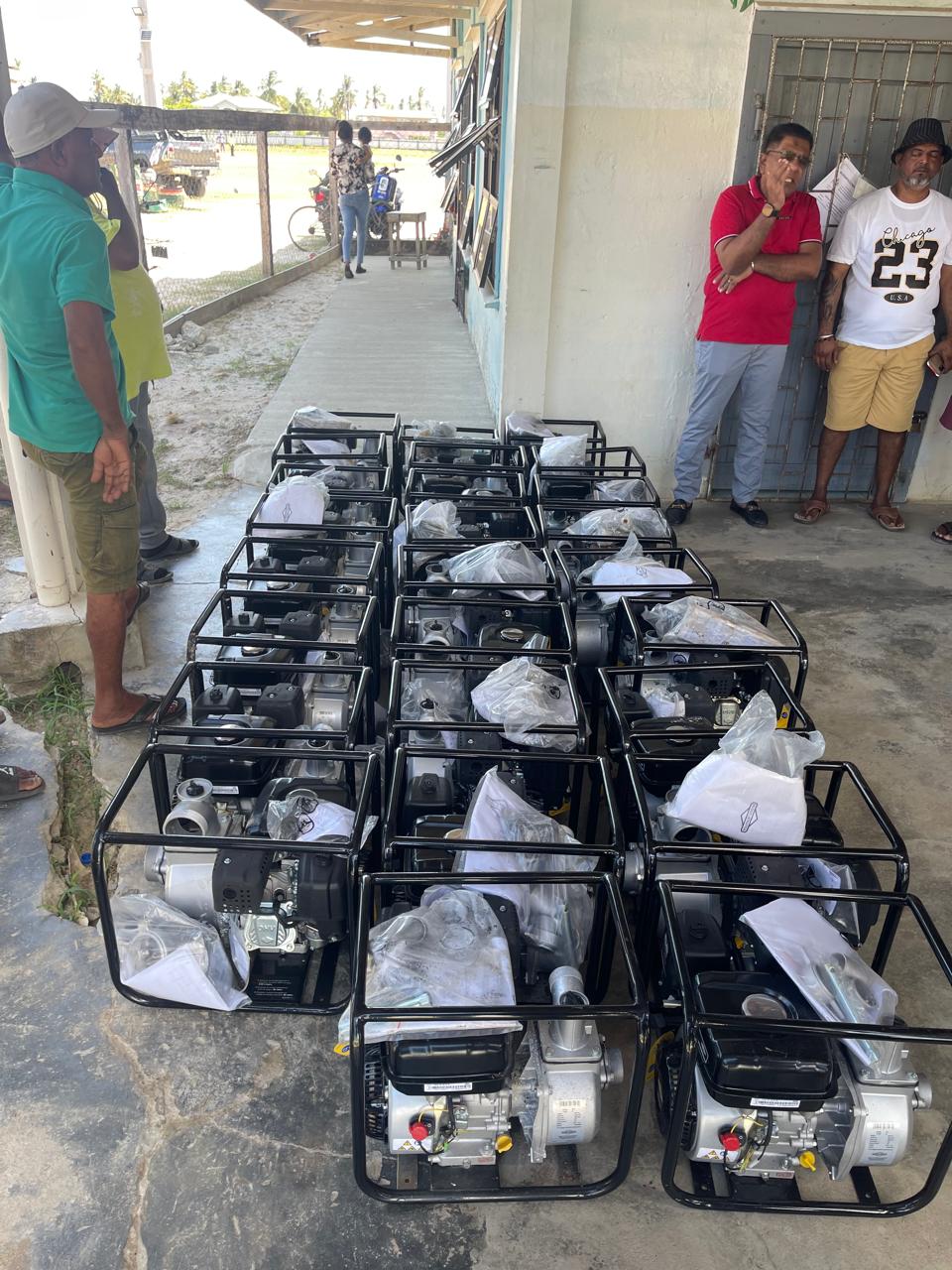
Agriculture Minister, Hon. Zulfikar Mustapha, earlier today handed over 25 garden pumps to farmers from the Whim/Bloomfield area, East Berbice-Corentyne, Region Six, as part of the Government’s continued efforts to support farmers, improve access to irrigation and increase agricultural production.
The pumps, each valued between $75,000 and $100,000, will assist farmers in improving water management and ensuring a more reliable supply of water for their crops, particularly during periods of dry weather.
At the distribution, Minister Mustapha said the Government is working to increase production by ensuring farmers have access to the equipment and supplies they need.
He also disclosed that farmers in the area will benefit from additional support, including planting materials, seeds, agrochemicals and other agricultural inputs, to encourage increased cultivation and improve productivity.
“We recognise that farmers face challenges, and as a Government, we have a responsibility to ensure that they receive the support necessary to remain productive. These pumps will help you to better manage your water supply, but our assistance does not end here. We will continue to provide planting materials, seeds, agrochemicals and other inputs to help you expand your cultivation, reduce your costs and increase your production,” Minister Mustapha said.
The Minister explained that the Government’s approach to agricultural development goes beyond providing immediate assistance to farmers, noting that substantial investments are being made to improve the infrastructure and support systems necessary for sustained growth across the sector.
He pointed to the ongoing expansion and rehabilitation of the country’s drainage and irrigation network, which remains critical to protecting agricultural lands from flooding, improving water management and making additional lands available for cultivation.
“Over the last six years, we have been making tremendous investments in drainage and irrigation because we understand that farmers cannot increase production without the necessary infrastructure. We are constructing new canals, rehabilitating existing drainage systems, installing pumps and improving irrigation facilities across the country. At the same time, we are developing thousands of acres of new agricultural lands so that more farmers can become involved in production and those already cultivating can expand their operations,” the Minister stated.
He noted that major drainage and irrigation interventions, including the development of high-level canals and the expansion of agricultural infrastructure in several regions, are intended to provide farmers with greater protection against flooding while improving access to productive lands.
Minister Mustapha further explained that these investments are being complemented by programmes to diversify agricultural production, with particular emphasis on reducing Guyana’s dependence on imported commodities and creating new economic opportunities for farmers.
He highlighted the Government’s continued investment in large-scale corn and soya bean cultivation, describing the initiative as a critical component of the country’s efforts to develop a more sustainable and competitive livestock industry.
“For many years, we have been importing large quantities of corn and soya to support our livestock industry, particularly poultry production. We are now changing that by developing large-scale production right here in Guyana. This will help us reduce our import bill, lower the cost of producing animal feed and create greater opportunities for our farmers and investors. We want to ensure that the growth we are seeing in agriculture translates into more jobs, increased production and greater economic benefits for our people,” he explained.
While highlighting growth in the rice industry, Minister Mustapha said the Government remains committed to supporting rice farmers through improved infrastructure, research, access to quality seed varieties and other interventions designed to increase yields and reduce production costs.
He noted that despite challenges associated with international market conditions, Guyana continues to make significant progress in rice production, with ongoing investments aimed at improving the industry’s efficiency, competitiveness and long-term sustainability.
“Our rice industry remains one of the most important pillars of our agricultural sector. We are working to ensure that our farmers can produce more efficiently, achieve better yields and remain competitive. This is why we are investing in research, improved seed varieties, drying and storage facilities, and other critical infrastructure,” Minister Mustapha said.
The Minister also spoke about the Government’s efforts to strengthen poultry production, noting that investments in breeding, hatchery development, modern production facilities and feed production are essential to meeting growing domestic demand and positioning Guyana to supply regional markets.
He explained that the expansion of poultry production is closely linked to the country’s corn and soya programme, as greater availability of locally produced animal feed will contribute to lowering production costs and improving the industry’s competitiveness.
Minister Mustapha also highlighted the growing potential of apiculture, noting that the Government is encouraging more farmers, women and young people to explore beekeeping as an additional source of income.
He said that beyond honey production, apiculture contributes to improved pollination, increased crop yields and the development of value-added products, making it an important component of the country’s agricultural diversification programme.
“Agriculture today is no longer limited to the traditional crops and livestock activities that we have known for many years. We are creating opportunities in new areas, including apiculture, high-value crops, agro-processing and modern livestock production. We want our farmers, especially our young people, to recognise that agriculture is a business and that there are tremendous opportunities to earn a sustainable livelihood from the sector,” he stated.
The Minister further pointed to the establishment of the regional food hub that is currently under construction as another major component of the Government’s strategy to modernise the sector and improve access to markets.
“The food hub we are developing will play an important role in connecting our farmers to markets. We cannot continue to focus only on increasing production without ensuring that farmers have reliable markets for what they produce. We must also invest in storage, processing and value addition so that our farmers can earn more from their produce,” Minister Mustapha said.
Placing these developments within the wider regional context, Minister Mustapha said Guyana’s agricultural transformation is central to the CARICOM’s efforts to strengthen food security and reduce dependence on extra-regional food imports.
He explained that under the leadership of President Dr. Mohamed Irfaan Ali, Guyana has assumed a leading role in advancing regional agricultural development, with major investments being made to increase production, diversify the country’s agricultural output and position Guyana as a reliable supplier of food to the wider Caribbean.
“Our vision is not only to produce enough food for Guyana. We want to ensure that Guyana can play a leading role in feeding the Caribbean. For too long, our region has depended heavily on food imports, even though, collectively, we have the land, resources and capacity to produce much of what we consume. President Ali has placed food security at the forefront of our development agenda, and we are making the investments necessary to turn that vision into reality,” the Minister said.
He added that the Government will continue to work closely with farmers, agricultural organisations and private sector stakeholders to identify opportunities for increased production and address challenges affecting the sector.