- 560 farmers registered, over 15,630 acres cultivated for the first crop
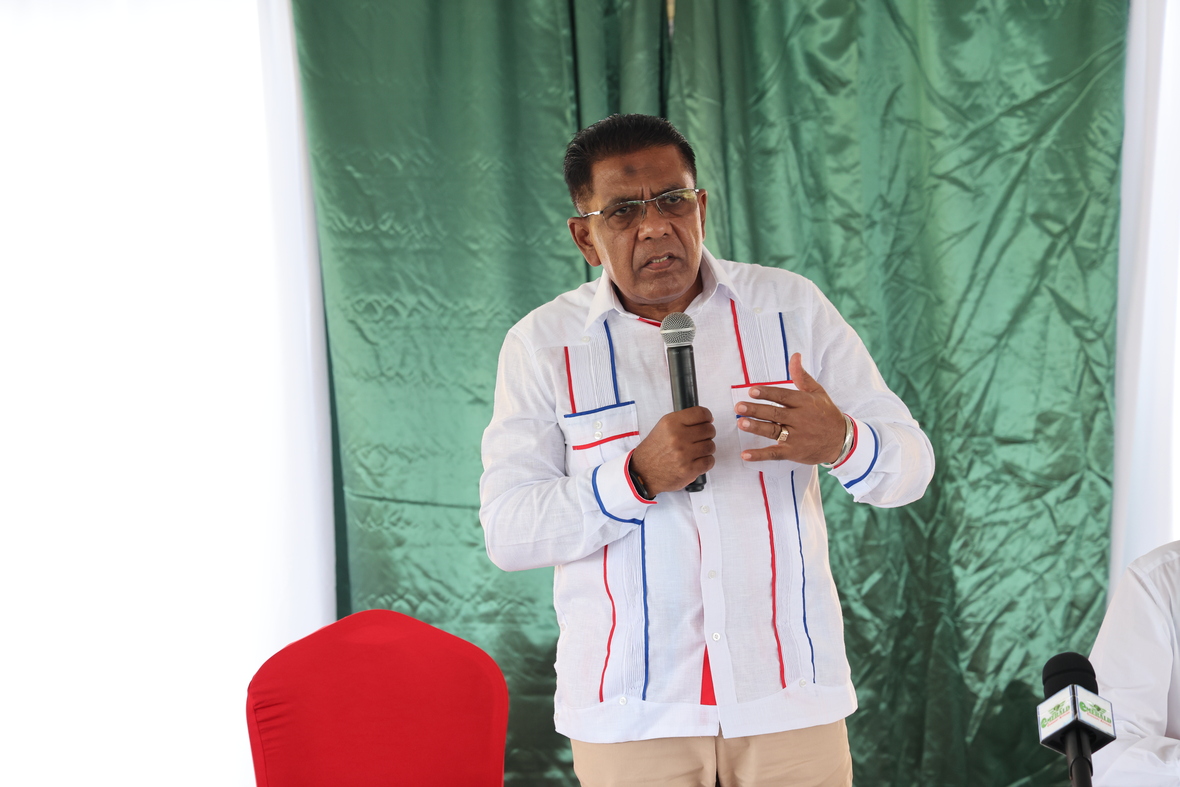
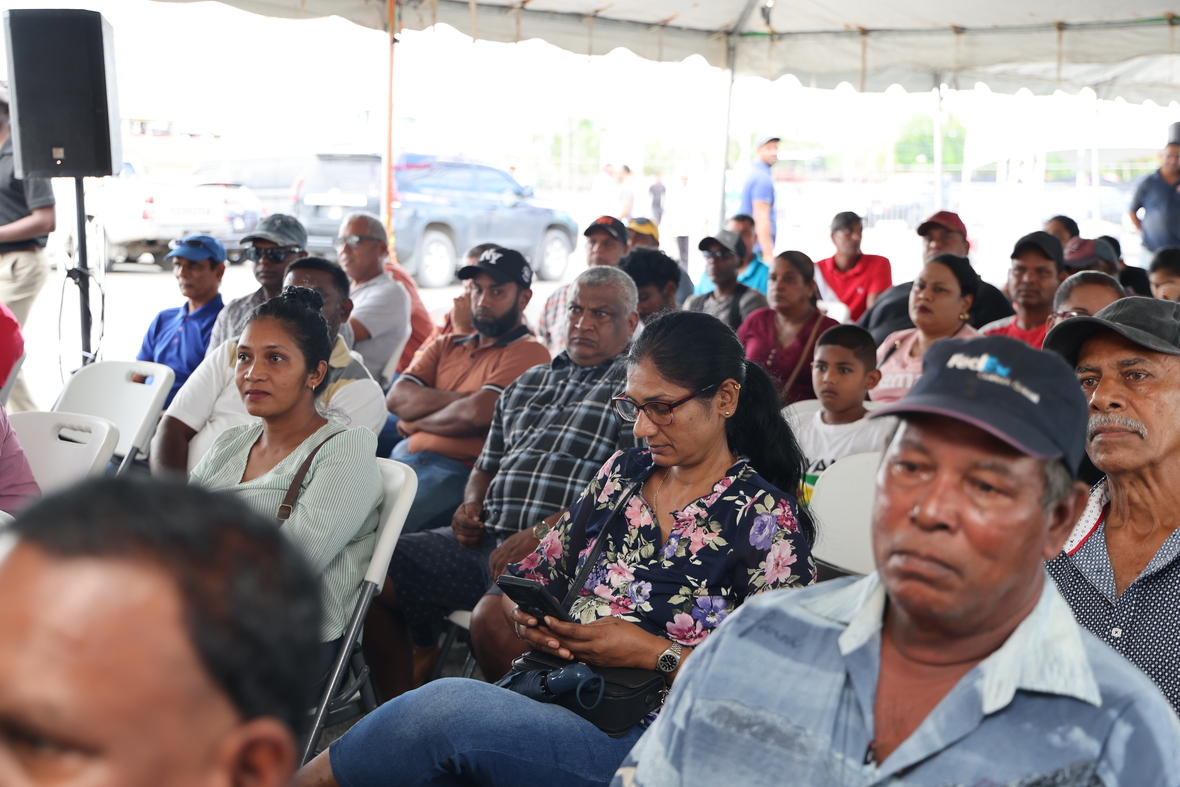
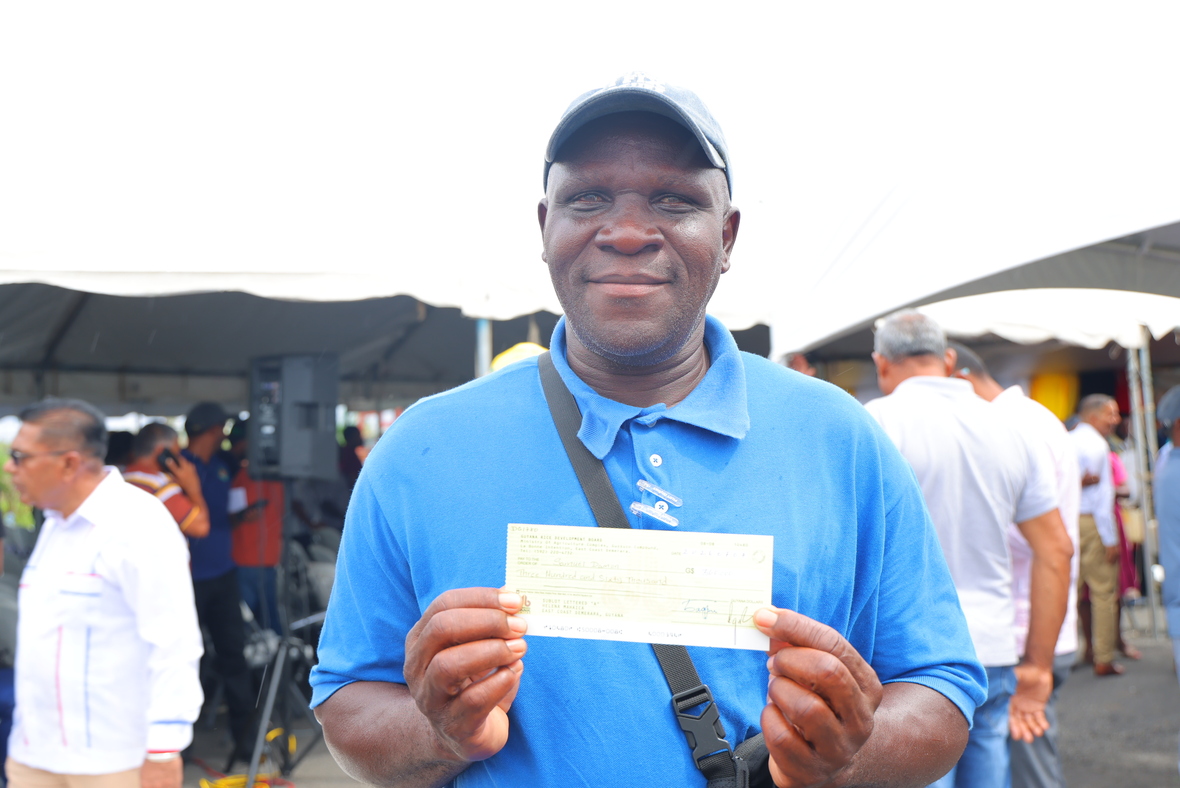
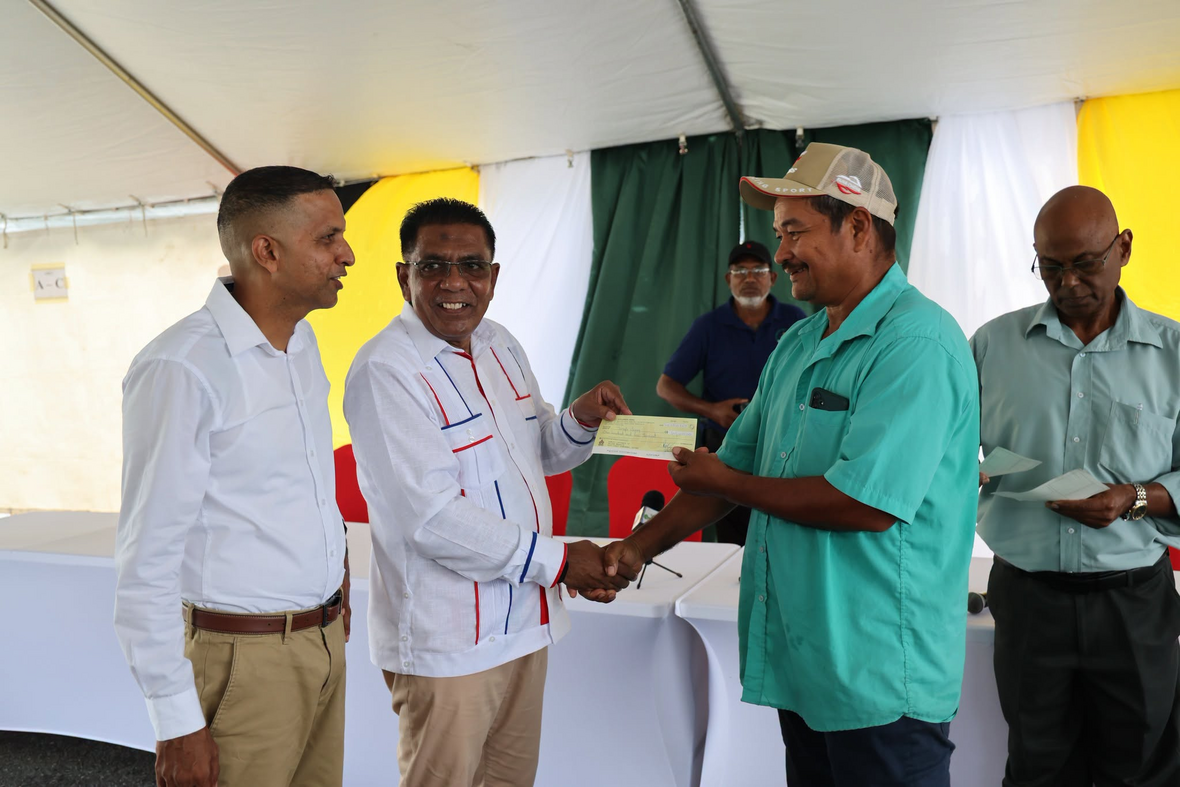
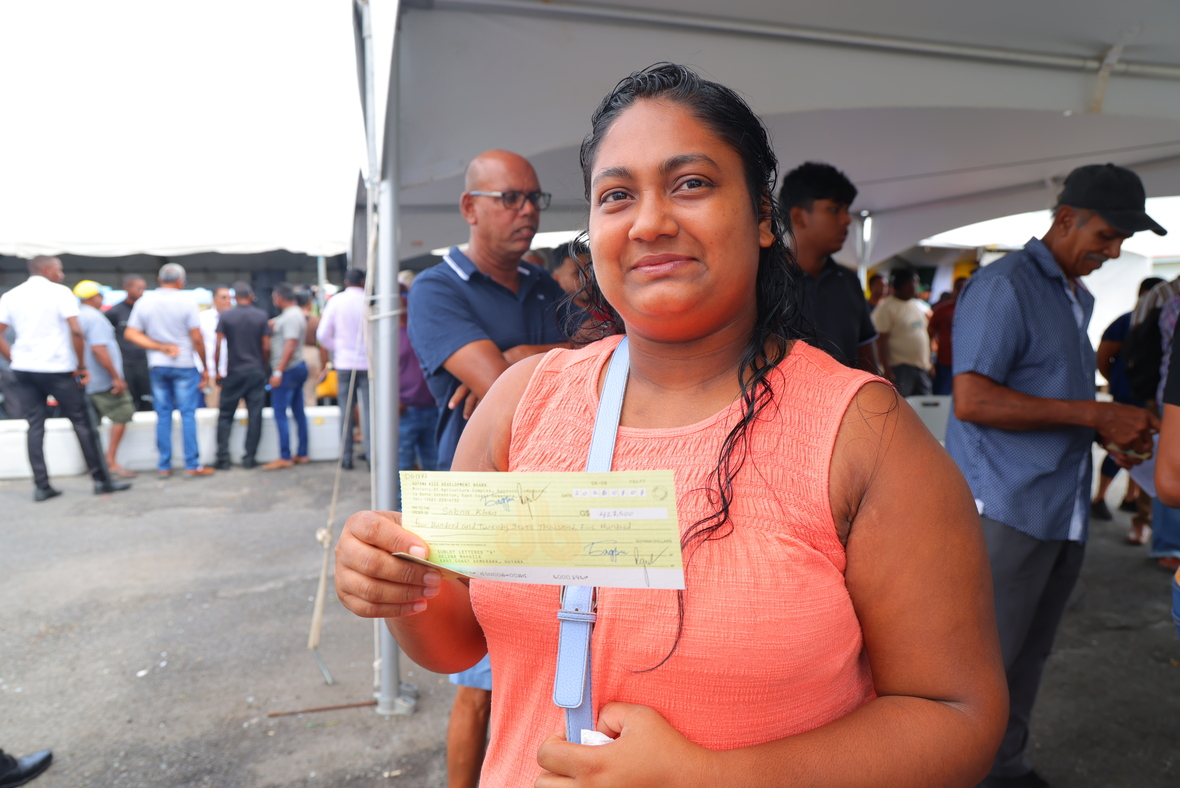
Agriculture Minister, Hon. Zulfikar Mustapha, this morning spearheaded the distribution of relief cheques to rice farmers from Region Three during an exercise held at the National Track and Field Centre at Leonora, where hundreds of farmers received financial assistance as part of the Government’s continued support for the rice industry.
Today’s distribution fulfills a commitment made by His Excellency, President Dr. Irfaan Ali, during a consultation with hundreds of rice farmers at the Arthur Chung Conference Centre in April this year. The initiative was announced as a targeted intervention to assist rice producers as the industry continues to navigate increasing global challenges affecting agricultural production, input costs, and international markets.
While addressing the gathering, Minister Mustapha disclosed that some 560 rice farmers from Region Three were registered to benefit from the initiative and are expected to receive more than $201 million in relief.
“We have 560 farmers who are listed, and they cultivated 15,636 acres of land during the last crop. In Region Three, we’ll be paying out $201,696,055. The total cost of the programme is $2.763 billion, which is direct cash to you, the farmers,” he noted.
Through the programme, farmers cultivating 50 acres or less are receiving $15,000 per acre, while those cultivating more than 50 acres are receiving $10,000 per acre.
Minister Mustapha also spoke about the continued investments the Government has been making to support farmers affected by declining world market prices for rice. He explained that the Guyana Rice Development Board (GRDB) has forgone export commissions normally paid by millers so that farmers can receive better prices for their paddy. As a result, the Central Government has had to allocate additional resources to the semi-autonomous agency to offset its operational expenses.
“Since rice prices on the world market began to decline, we have forgone approximately $600 million. From that time to now, every single year, we have forgone the commission that the GRDB would usually charge millers for exports, almost $650 to $700 million annually. GRDB is a semi-autonomous agency; it has to generate revenue to operate. So, when we forgo the commission, the Government now has to make that contribution to GRDB. For this year, I believe about $430 million has already been paid, and GRDB will require about $807 million more to offset its expenses because it has also forgone the commission,” he explained.
The Minister also highlighted the additional support provided to farmers through fertilizer assistance and other relief programmes aimed at reducing production costs.
“We also helped farmers with fertilizer. For every acre of rice planted last year, farmers received one bag of fertilizer per acre. In addition, for both crops last year, we gave farmers $300 for every bag of paddy sold to millers. Through GRDB alone, we contributed $750 million. That was the level of support provided, apart from the investments being made to rehabilitate and transform the sector and improve infrastructure,” he added.
Despite the challenges facing the rice industry, Minister Mustapha said the Government’s interventions have contributed to significant growth in production over the last five years.
“We have moved rice production from 550,000 tonnes in 2020 to 825,000 tonnes last year. Already, for the first half of this year, we have achieved our first crop target, having produced more than 414,000 tonnes of paddy, and I am very optimistic that by the end of the year we will meet the target we set for ourselves and surpass last year’s production of 825,000 tonnes. That shows the improvements we have made in infrastructure, that the new varieties we introduced are high-yielding varieties, and that farmers are now producing more paddy.
“But the most important thing is ensuring that there are markets for your paddy. We are a small player in the global rice industry. Countries like India, Malaysia, Indonesia, and Australia produce millions of tonnes of rice. That is why we continue to work with various agencies to secure more lucrative markets for our rice. I have been engaging my colleague, Minister of Foreign Affairs and International Cooperation, Minister Todd, so that together we can identify additional export opportunities. We have engaged countries such as Mexico, Haiti, and Cuba, and we are continuing our efforts within the CARICOM region. I am mentioning these things because sometimes people say they are not receiving support from the Government. I want to say here this morning that this PPP/C Government, your government, has provided tremendous support to rice farmers,” he explained.
Turning to infrastructure, Minister Mustapha said that a number of farm-to-market roads, along with critical drainage and irrigation structures, have either been completed or are currently under construction to support agricultural development in Region Three.
“Across the region, a number of farm-to-market roads have already been completed, while others are being rehabilitated or are currently under construction. In the coming months, Region Three will see even more major infrastructure investments. We are on the verge of constructing another high-level canal, which will significantly improve drainage by operating on a 24-hour basis. We have already constructed three new pump stations, and another four will be completed in the coming months. That means this region will have seven new pump stations in addition to the existing ones.
“We are also looking to introduce drone technology to assist small-scale farmers because labour shortages continue to pose a major challenge. We are working to modernise the sector so that farmers can benefit from these technologies, including the use of drones for spraying operations,” he explained.