- says over $7.4B invested since 2020
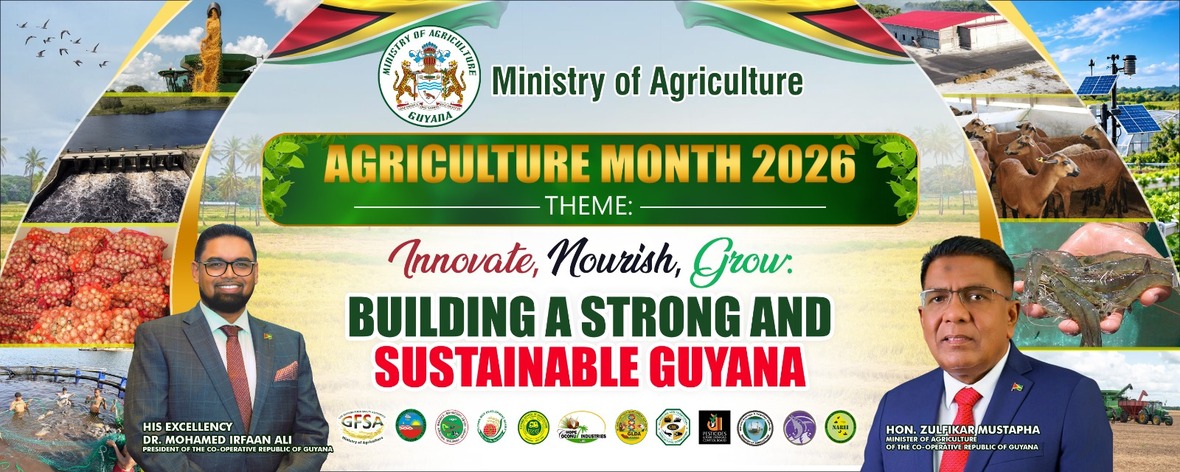
During day three of this year’s National Toshaos Council Conference, Agriculture Minister, Hon. Zulfikar Mustapha said that the government remains committed to building a modern, commercially driven agricultural sector in Guyana’s hinterland and indigenous communities, disclosing that more than G$7.4 billion has been invested in the sector since 2020.
Speaking during an interactive session, Minister Mustapha outlined the significant investments made across the sector, while detailing the ministry’s strategic vision to transition hinterland agriculture from subsistence farming to sustainable commercial production.
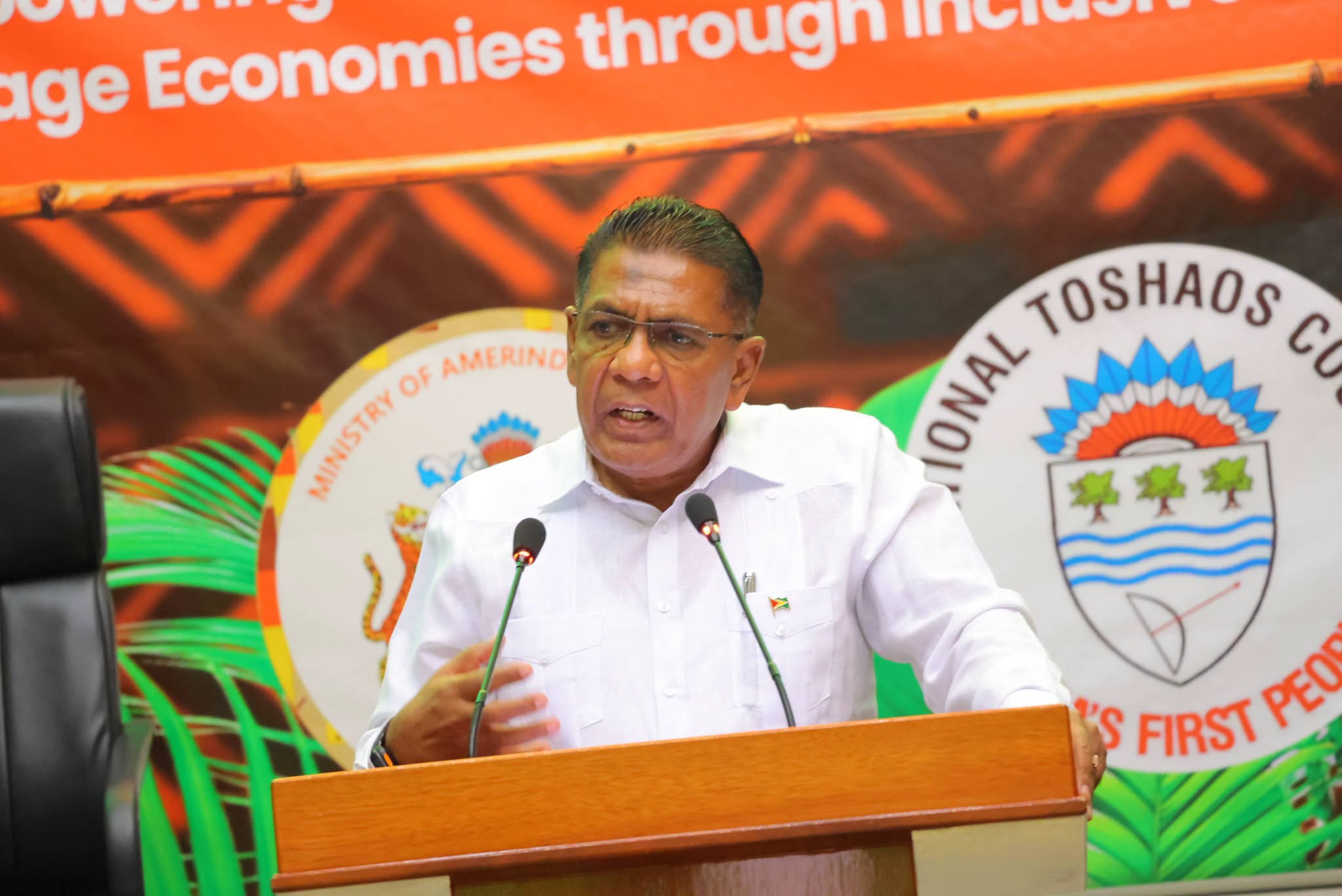
Minister Mustapha said the investments are aimed at strengthening food security, creating employment, increasing household incomes and unlocking new economic opportunities for Indigenous villages.
“First and foremost, our communities must secure nutritious food for every family. That is the foundation. But once food security is achieved, we must move beyond subsistence. Our projects must do more than feed communities; they must create sustainable income and long-term economic strength,” he said.
While highlighting specific investments, he explained that over the last six years, the National Agricultural Research and Extension Institute (NAREI) alone has invested more than G$2 billion in hinterland and Amerindian communities to expand agricultural production and diversify livelihoods.
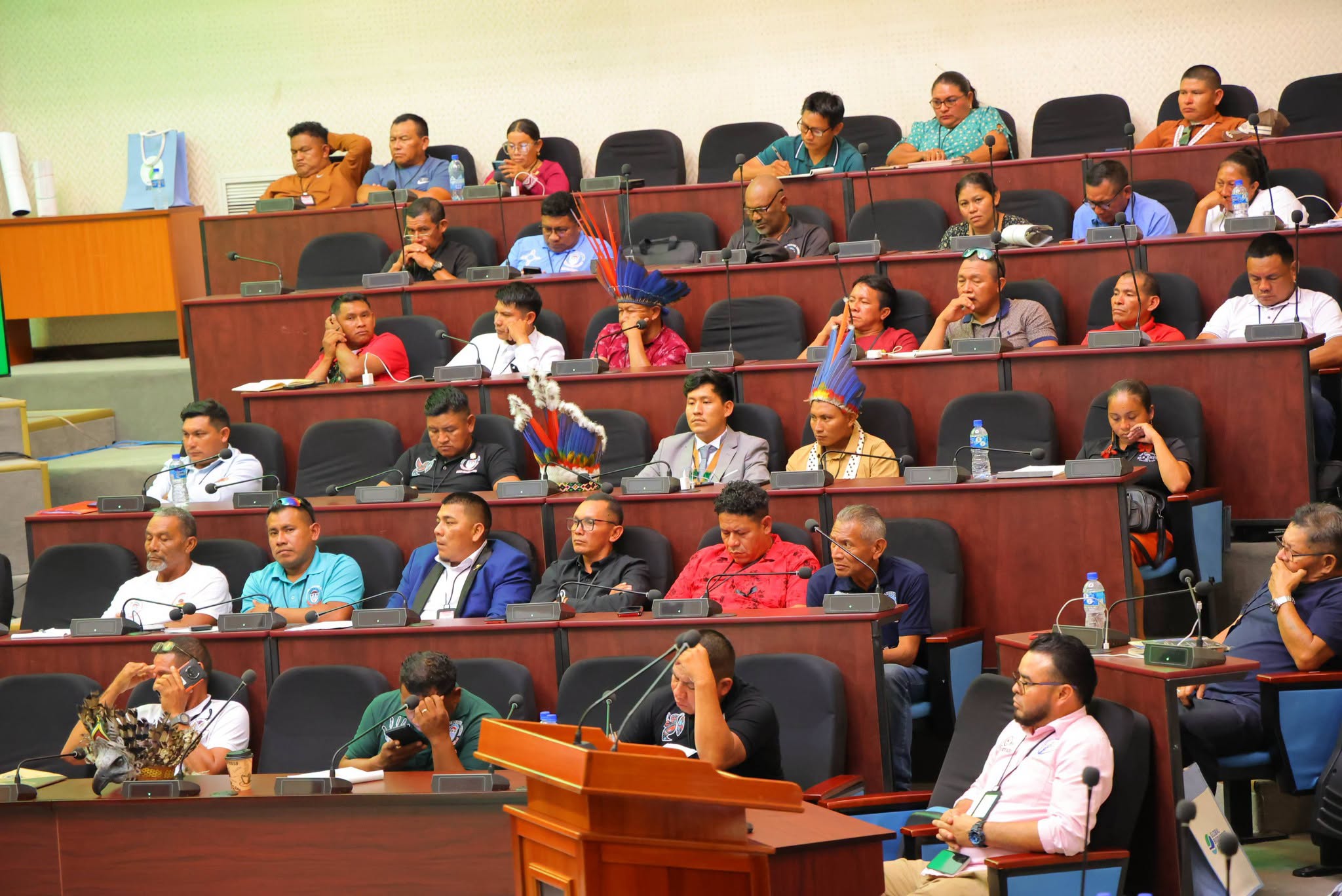
Additionally, while describing coconut as an emerging high-value crop for hinterland communities, Minister Mustapha said the approximately G$2.68 million invested to support the crop’s development, adding that farmers are being empowered and positioned to benefit from the growing local and regional demand.
“More than 5,000 coconut seedlings have already been distributed in Region One, while coconut development programmes are also underway in Regions Three, Four, Five, Six, Nine and Ten. This is an emerging high-value crop for hinterland communities, and we are positioning farmers to benefit from the growing local and regional demand,” he explained.
Similarly, the fisheries and aquaculture sector has also seen substantial investment, with G$393 million invested between 2020 and 2026 to expand aquaculture development in hinterland and Indigenous communities.
“Aquaculture is now one of the fastest-growing income streams in Indigenous communities. We are seeing tremendous opportunities for villages to increase production while generating sustainable incomes. We have the cage aquaculture project in Regions 2, 4, 7, 9, and 10. In Region 9 alone, we’ve invested approximately $22 million to develop fish ponds and other critical infrastructure to support inland aquaculture,” he said.
Minister Mustapha also said that significant investments have also been made in livestock development, with the Guyana Livestock Development Authority (GLDA) investing approximately G$773.8 million to strengthen livestock production in hinterland communities. This investment, he explained, has also contributed to increases in honey production in Regions 3, 7, 8, and 9, thus creating additional opportunities for income generation.
Future Plans
Minister Mustapha also discussed some of the plans for agricultural development in the coming years. He said the government has already identified eight commercially viable investment profiles based on the unique competitive advantages of each hinterland region.
“We have examined every region of this country and identified eight commercial-scale investment profiles that are ready for expansion. These are not experiments; they are strategic, data-driven opportunities designed to lift incomes, create jobs and position villages as engines of economic growth,” he said.
These priority areas, he explained, include broiler poultry production, cattle rearing, swine production, sheep farming, honey production, cage aquaculture, crop cultivation, which include coconut, dragon fruit, watermelon, carrots, strawberries, avocado, hot peppers, citrus, turmeric and ginger, as well as agro-processing.
Minister Mustapha stressed that all future projects must be commercially sustainable and capable of generating long-term returns for communities.
“To ensure viability, not dependency, every proposal must answer three simple but powerful questions: What problem are we solving? Who will buy the products? And how will the project generate income year after year?” he said.
He noted that the ministry has already costed commercial-scale production models and aligned them with the region or regions best suited for each commodity, to ensure investments are targeted, efficient and responsive to local strengths.
He also underscored the critical role of value-added production in transforming rural economies, particularly through agro-processing.
“We want families to move away from depending solely on raw produce to producing value-added goods, earning higher incomes and entering new markets,” Minister Mustapha said.
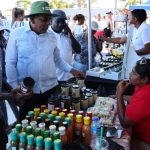
He encouraged communities to expand the production of products such as farine, cassava bread, cassava starch, cassareep, packaged spices, bottled honey, pepper sauces, fruit jams and juices, noting that agro-processing has become a major driver of women’s employment and youth entrepreneurship.
The National Toshaos Council Conference is being held at the Arthur Chung Conference Center under the theme “ Empowering Leadership while Building Sustainable Village Economies through inclusive Partnership”.