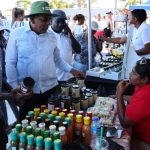
Minister of Agriculture Zulfikar Mustapha on Tuesday met with farmers on the Essequibo Coast, Region Two where he outlined a series of measures aimed at protecting varioius industries, reducing production costs and creating new income-generating opportunities through agricultural diversification.
The engagements saw rice, shrimp, and onion farmers speaking with the minister directly. It was held at the region’s Regional Democratic Council’s board room and compound.
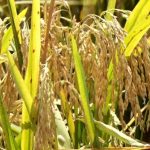
On the rice sector, the minister said that the government remains committed to supporting the industry while helping farmers modernise and become more competitive.
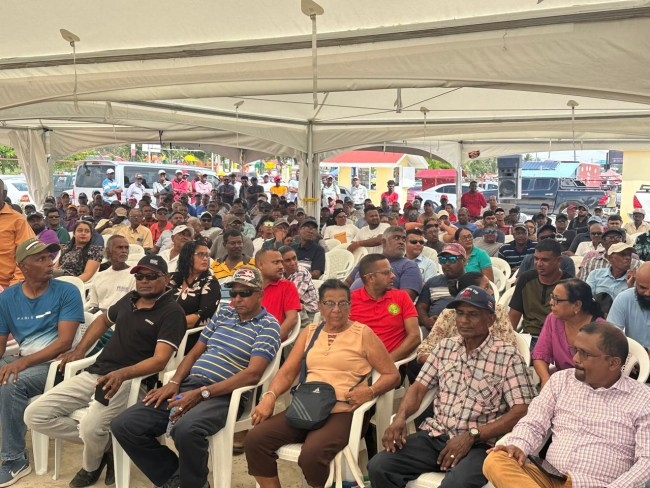
“We have to make this industry more competitive. It is now the farmers, you have to play your part too, reducing the cost of production so more money will remain in your pocket,” the minister told farmers.
He noted that over the years rice farmers have benefited from the government support including fertilizer, chemicals, drainage and irrigation works, bridges and farm-to-market roads.
According to the minister, approximately $832 million was invested through the National Drainage and Irrigation Authority (NDIA) for drains, canals, bridges and farm-to-market roads, while another $3.2 billion was spent on fertilizer support for farmers.
He also referenced over $2 billion in flood relief assistance provided in 2021.
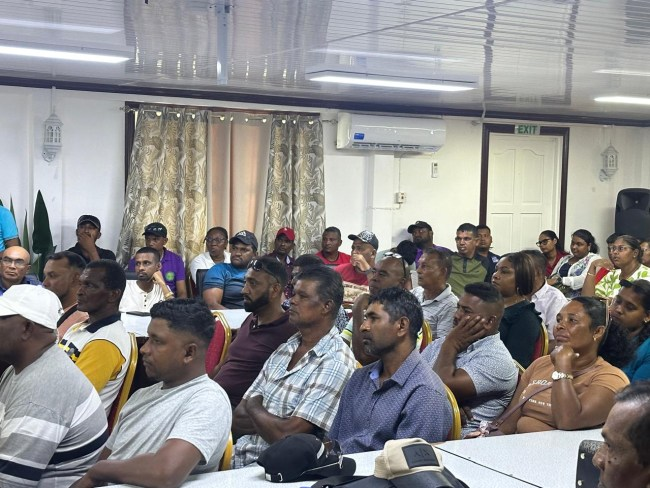
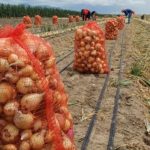
The minister also engaged onion farmers and noted that the government will soon be launching a pilot project on the Essequibo Coast where about 48 acres of onions are expected to be planted by next week.
“We want to be self-sufficient in onion,” Minister Mustapha said, adding that the National Agricultural Research and Extension Institute (NAREI) will work with farmers by providing technical training and support.
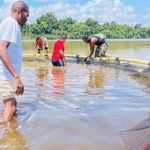
Meanwhile, the shrimp and poultry projects are expected to commence as early as next week with infrastructure works and pond layouts already being planned.
The minister explained that the projects will be implemented in groups to ensure participants can work together and support each other throughout the process.
For the shrimp farming, participants can expect at least 10 buckets of shrimp every six weeks, with each bucket costing around $10,000.
Support will also be provided to establish the necessary infrastructure, while assistance will be given to secure markets for the produce if participants are unable to find buyers on the Essequibo Coast.
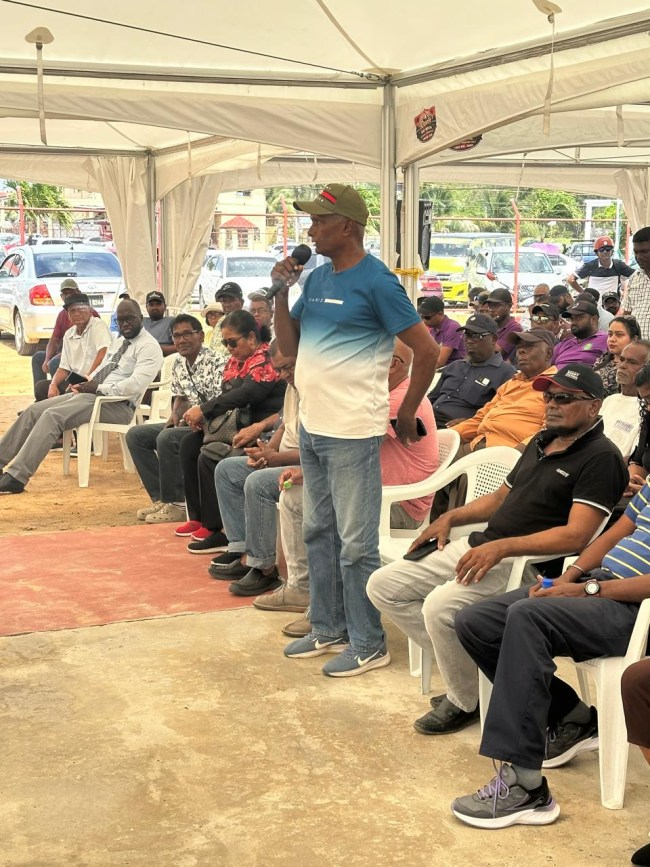
Meanwhile, within another four months, eight poultry operations are expected to be fully operational, producing approximately 40,000 birds every six weeks.
The project will be financed through a $40 million bank loan, with a repayment arrangement to be worked out among the groups, and the bank , Minister noted.
After expenses, the poultry operations are projected to generate an annual profit of about $61 million. The facilities will be automated, with an estimated mortality rate between 1.5 and 2 percent.
The agriculture minister also announced that government is moving ahead with the construction of a $1.5 billion government silo in Essequibo, with the tender process already underway.