- says short and long-term measures being implemented
With the ongoing conflict in the Middle East creating uncertainties in the global supply chain for vital commodities, policymakers around the world have been engaging in discussions to determine the way forward.
On Wednesday, Agriculture Minister, Hon. Zulfikar Mustapha, participated in a virtual meeting with Dr. Muhammad Ibrahim, Director General of the Inter-American Institute for Cooperation on Agriculture, along with other regional and international officials, to examine the impact of the conflict on agri-food systems across the region.
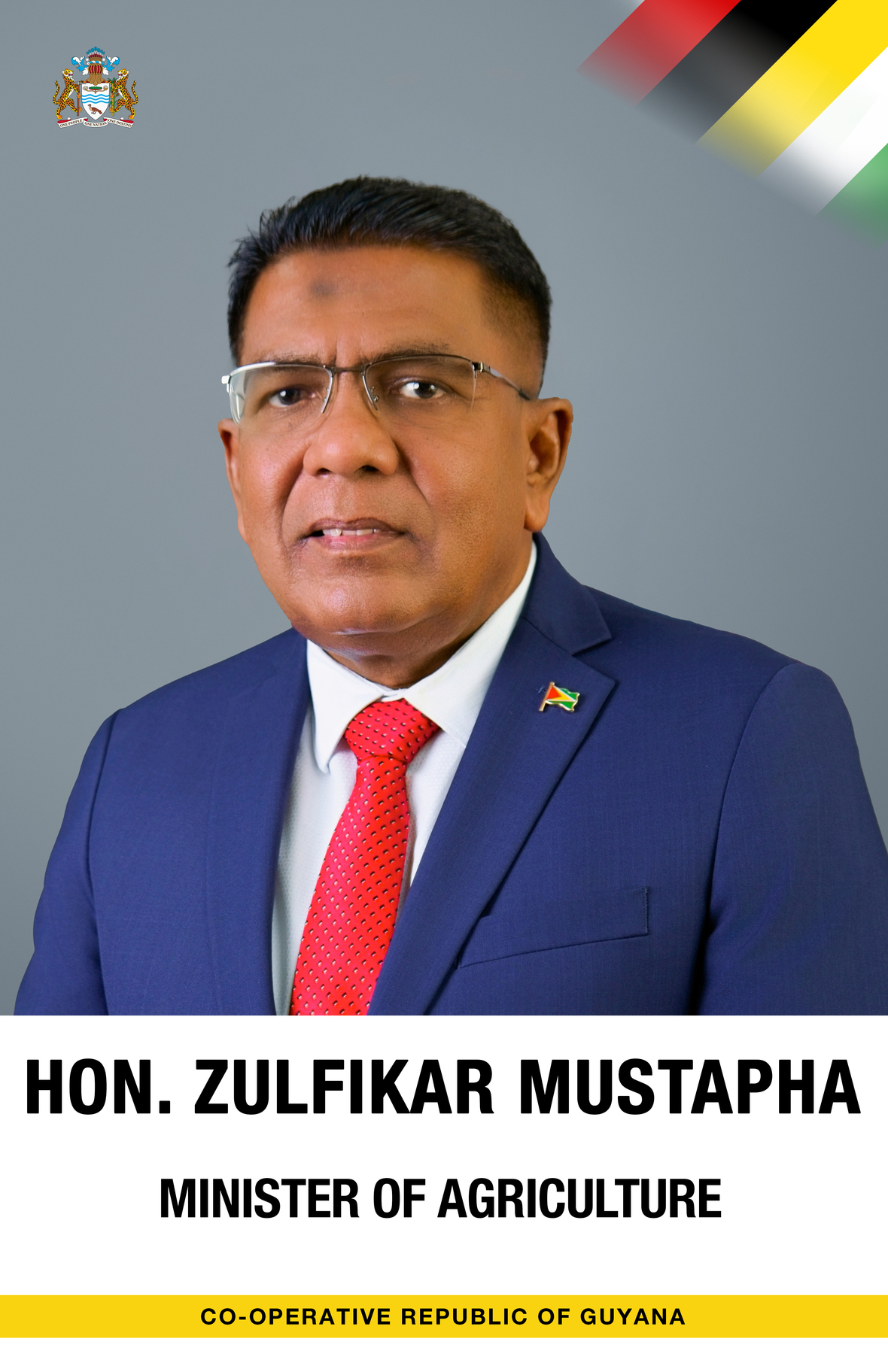
During the engagement, Minister Mustapha noted that the current geopolitical tensions in the Middle East serve as a stark reminder that external shocks can have far-reaching consequences for agri-food systems, particularly in small, open economies such as those within the Caribbean Community. He highlighted that while CARICOM countries have implemented important short-term measures to cushion the effects, building true resilience requires structural transformation.
“CARICOM’s recent experience, from the pandemic to the Russia-Ukraine conflict, and now the unfolding situation in the Middle East, has revealed a consistent pattern of vulnerability across our agri-food systems. These shocks are transmitted rapidly into our economies through several interconnected channels, producing measurable impacts. Rising energy prices increase the cost of production, transport, irrigation, and cold storage; fertilizer disruptions tighten supply, elevate input costs, and reduce yields; logistics and shipping constraints, including high freight costs and limited intra-regional transport options, delay food imports; and international food price increases erode household purchasing power and elevate domestic inflation,” he explained.
Minister Mustapha further stated that CARICOM countries have implemented several short-term measures to mitigate these impacts.
“At the level of CARICOM, we’ve introduced targeted fuel support for farmers and fisherfolk, reduced taxes on essential food items, provided fertilizer subsidies and promoted composting, pursued bulk procurement of essential imports, expanded social protection programmes, including school feeding and cash transfers, and implemented anti-hoarding measures to prevent artificial shortages,” he said.
He added that, beyond these immediate interventions, long-term strategies remain critical to strengthening resilience across the region.
“Resilience requires structural transformation. As such, in the long term, CARICOM is prioritizing investments in renewable energy systems such as solar irrigation, expanding local food production, advancing import substitution, and shortening supply chains. We are also working to diversify fertilizer sources, strengthen local organic fertilizer production, modernize ports, storage, and logistics infrastructure, institutionalize food price monitoring and early warning systems, and invest in rural development and climate-smart agriculture,” the Minister noted.
Minister Mustapha also indicated that, with the support of international partners, including IICA, and collaboration with the private sector, CARICOM anticipates opportunities to expand technical support for renewable energy in agriculture, finance climate-smart infrastructure and logistics modernization, strengthen early warning systems and food security monitoring, advance research on alternative fertilizers and resilient crop varieties, and support digital agriculture and precision farming.