In another bold step to cultivate a competitive rice industry in Guyana, the Government of Guyana, through the Ministry of Agriculture, on Tuesday launched the ‘Guymati’ (GRDB-19) aromatic rice variety.
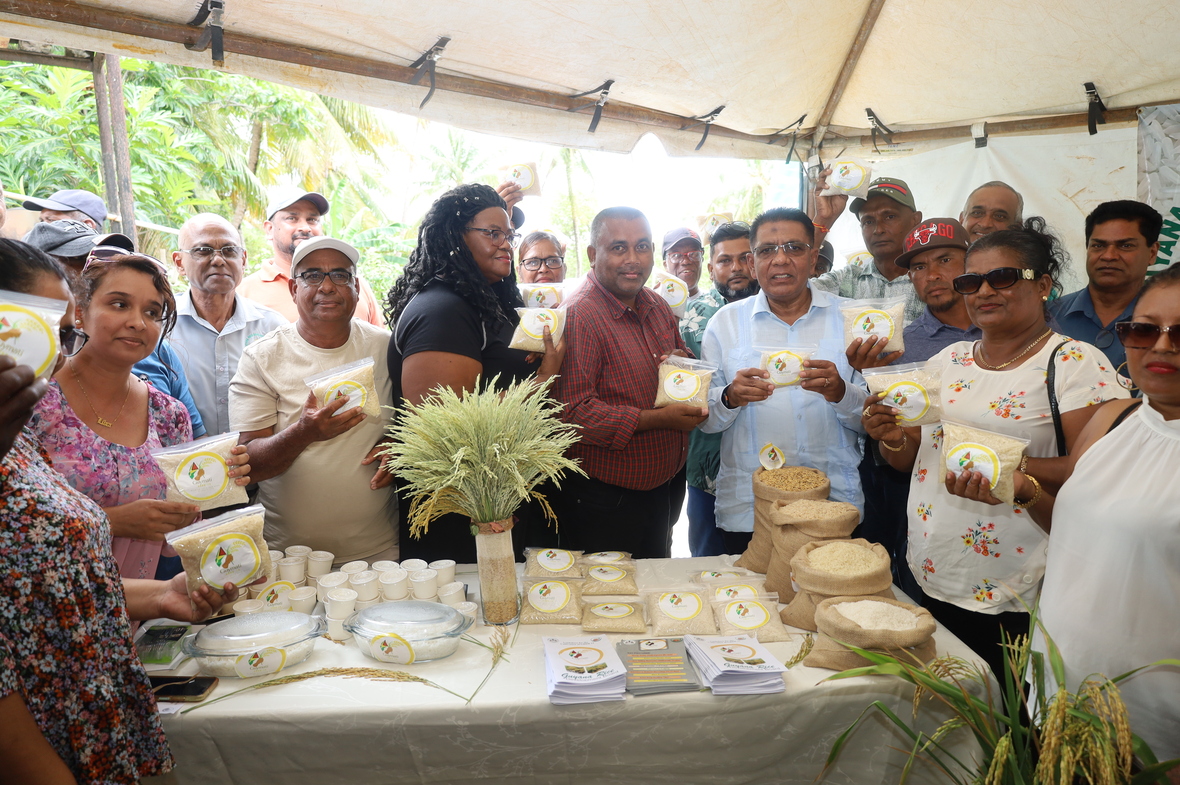
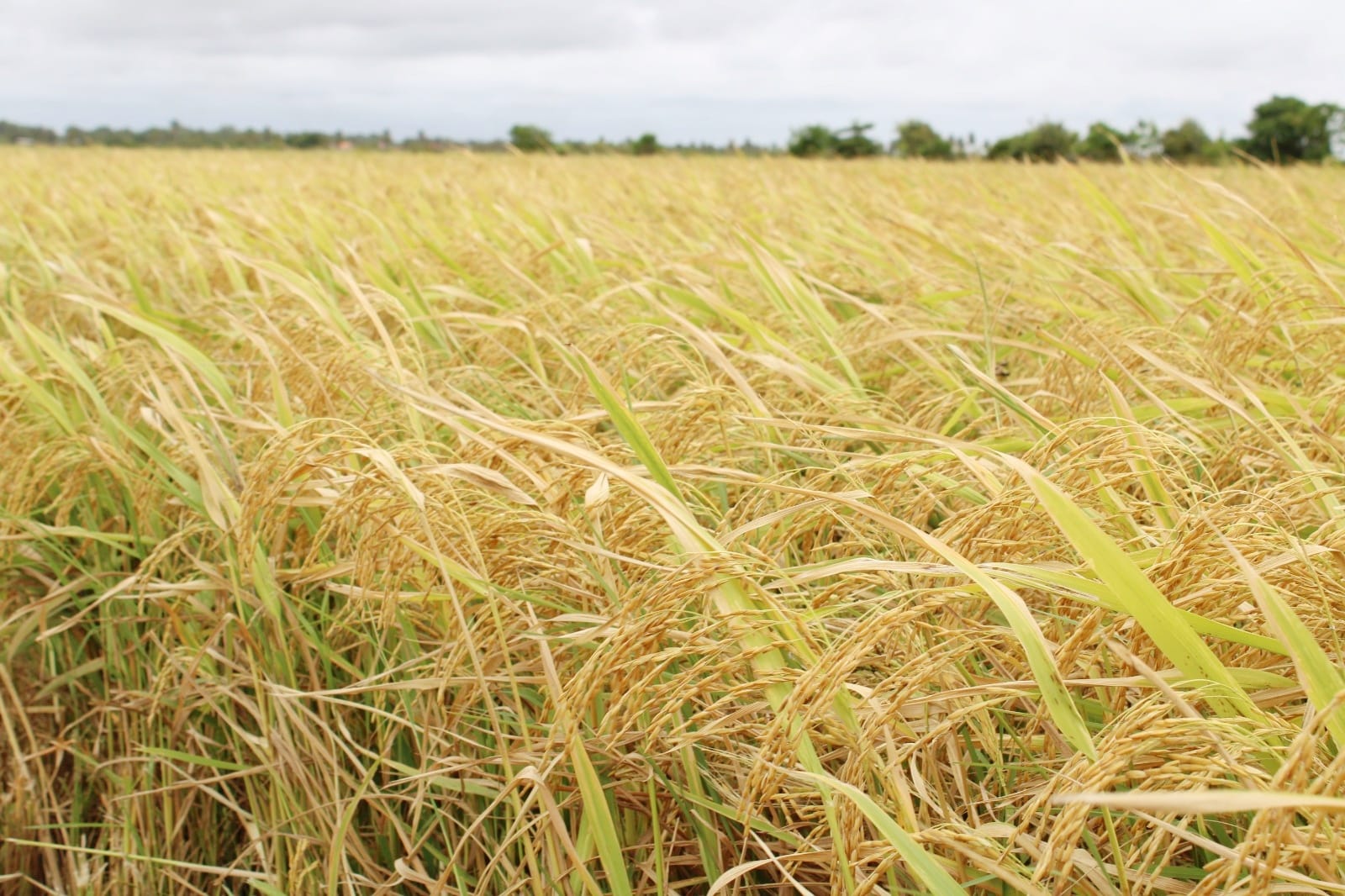
With initial research commencing in 1997, scientists attached to the Guyana Rice Development Board (GRDB) have worked tirelessly to develop a variety that can withstand the climatic and other conditions present in Guyana, which would usually pose a challenge to the optimal productivity of aromatic varieties.
While speaking at the launch, Agriculture Minister Hon. Zulfikar Mustapha noted that, over the years, the government’s investment has been a major driver of growth and stability in the rice sector, focusing on supporting farmers, improving production, and expanding exports. He further stated that, in 2025, rice production in Guyana reached a record high of 810,299 metric tonnes, with yields of 6.6 tonnes per hectare, also the highest ever recorded.
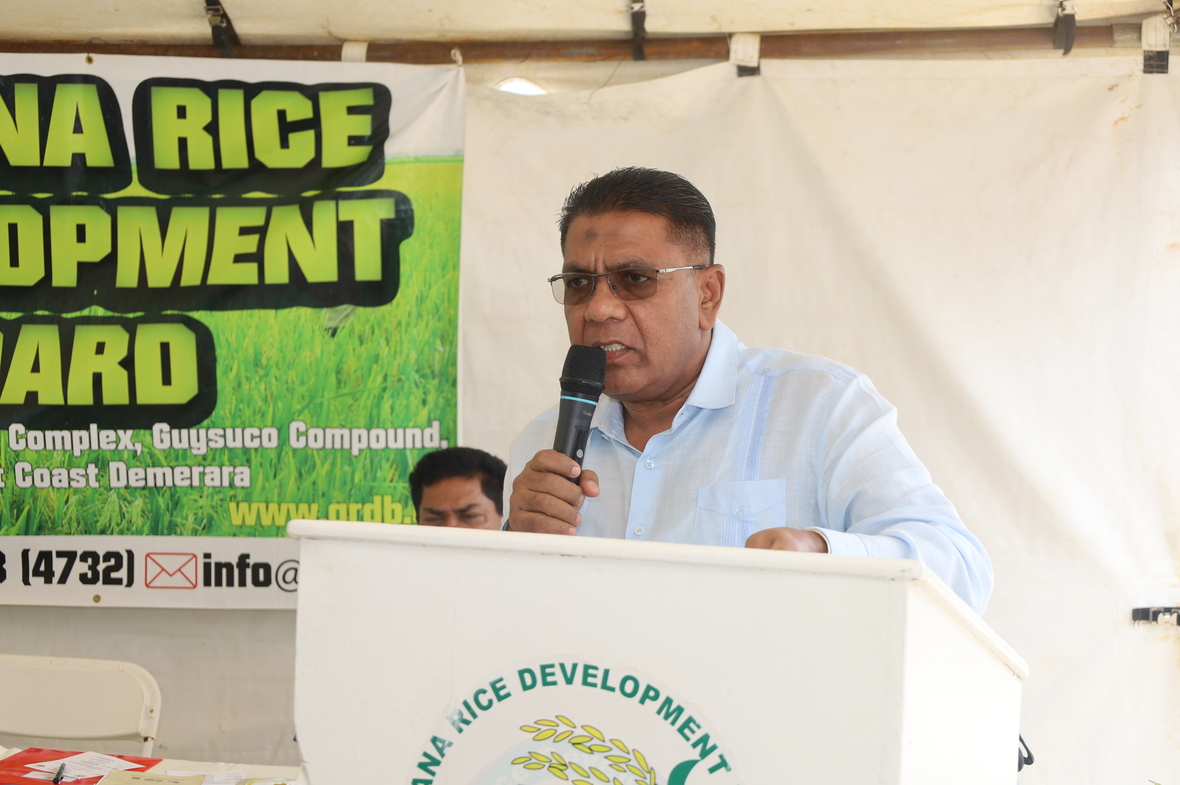
“From 1997 to 2025, we’ve released eighteen (18) rice varieties, which have significantly increased national productivity, from 4.0 tonnes per hectare in 2005 to an average of 6.6 tonnes per hectare in 2025. We are now targeting production of eight tonnes per hectare. These developments show that we are not stagnant. Every time we launch a new variety, its characteristics are better than any variety we would have released before. This aromatic variety that we are launching today has even more potential. It is high-yielding and will attract preferential prices. It has the potential to improve your livelihoods because, as farmers, you depend on this industry,” he said.
Minister Mustapha said that, with its extra-long slender grain, this aromatic variety is classified as a premium product.

“This variety is blast-resistant and has tolerance to lodging. It requires the same cultivation and agronomic practices as the other GRDB rice varieties and, therefore, will not require any additional cost of production. Not many countries in the world have achieved this, so it is a remarkable accomplishment by our scientists. Today, we thank our Chief Scientist and the GRDB team for their dedication to the rice industry,” Minister Mustapha explained.
Minister Mustapha also said that while the government is working to increase rice production, farmers are also being empowered to diversify. He challenged farmers to work with the ministry to dedicate small acreages for the production of high-value crops.
“While we are encouraging you and making the resources and infrastructure available for diversification, let us look at ways in which you, as rice farmers, can diversify. Today, as Minister of Agriculture, I am challenging you to dedicate at least two acres for diversification. I will instruct the GRDB and NAREI to work with you to develop high-value crops that will be lucrative and for which you will have markets. For instance, look at what we are doing with onions. If we plant two hundred acres of onions, we will be self-sufficient. In 2022, we imported $2.6 billion in high-value crops like carrots, broccoli, cauliflower, and bell peppers,” he explained.
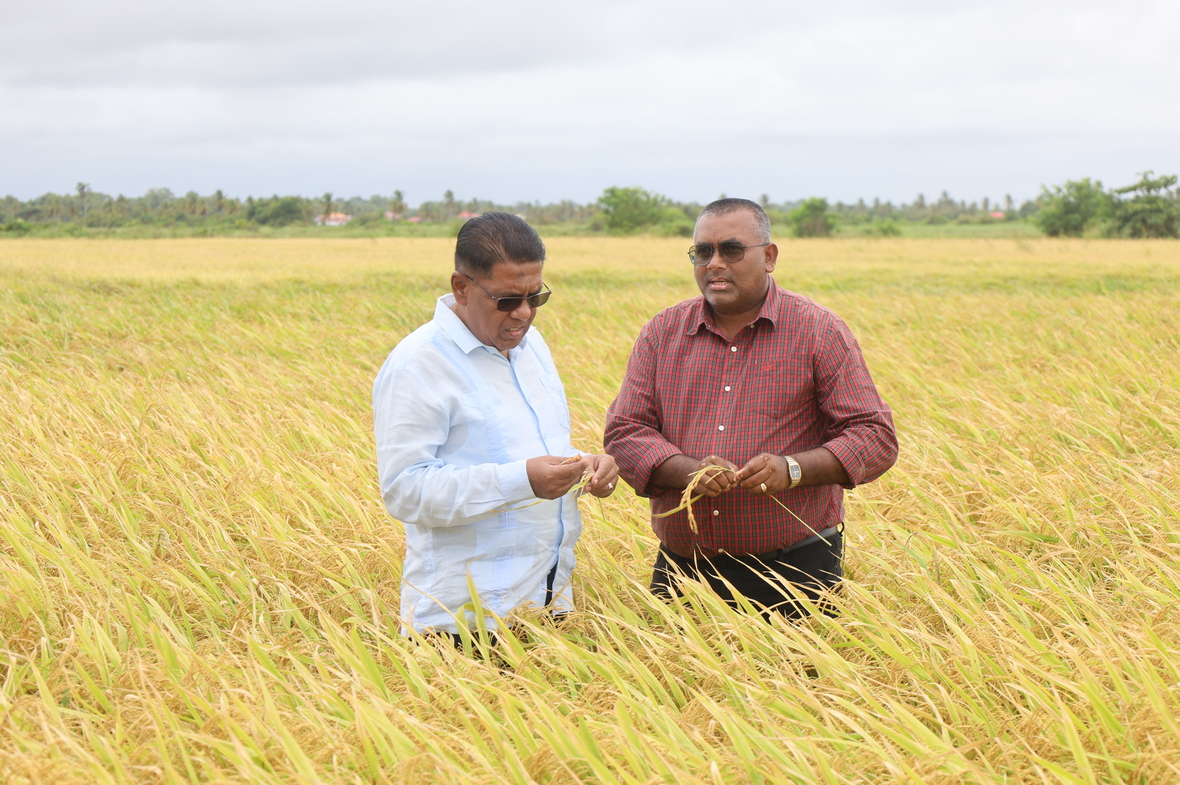
GRDB’s Chief Scientist and plant breeder, Dr. Mahendra Persaud, said that while traditional aromatic varieties have lower yields, the Guymati has recorded yields of between six and eight tonnes per hectare. He explained that in developing this variety, producing a higher-priced rice with improved nutritional value were among the targeted outcomes set by the Board.
“We were looking for higher-priced rice, rice with better nutrition, and so on. The aromatic variety is a higher-priced rice and has very good quality. It is among the best quality rice on the international market. But when you ask why many countries are not producing it, you have to take into account that it is not easy to develop an aromatic rice variety that performs well in a particular environment. In 2010, we started this journey with this particular aromatic variety. From 2010 to 2017, we developed a lot of breeding material. From 2017 to 2026, we conducted extensive field testing and studied all the traits. To date, we have conducted over one hundred trials across the country, including more than thirty current trials ranging from one acre to thirty acres. While traditional aromatic varieties have lower yields, the Guymati has recorded between six and eight tonnes per hectare. The variety does not lodge easily, and its grain quality is excellent, with extra-long grains—longer than the Jasmine type but slightly shorter than the Basmati type. The variety also has the added advantage of withstanding delayed harvesting, which is important for many farmers,” he explained.
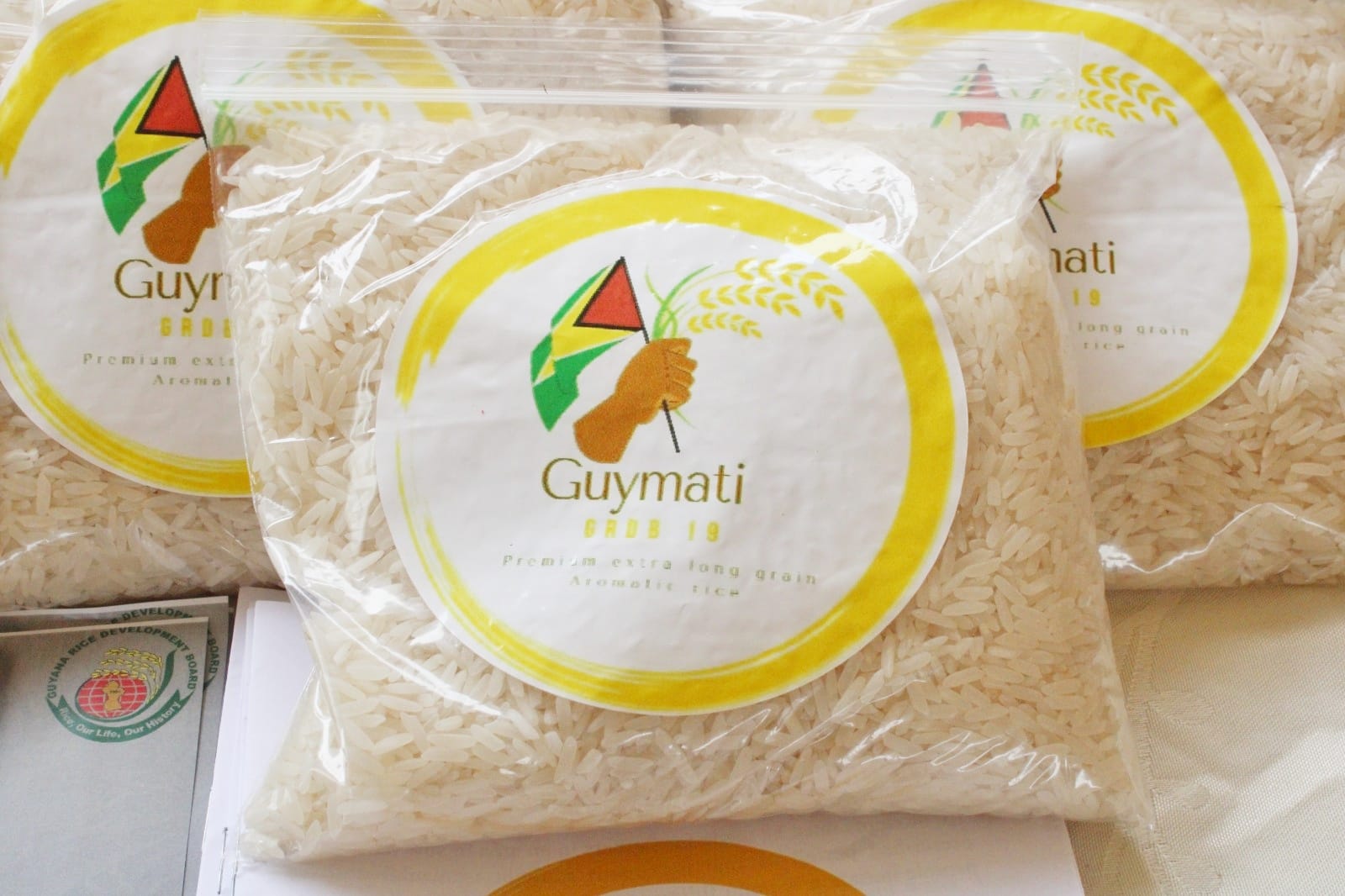
Dr. Persaud also noted that this variety has one of the strongest aromas in the world and can compete with any aromatic varieties produced globally.
This development marks a significant step in rice production in Guyana, as aromatic rice is considered a high-value commodity that can provide farmers with greater profitability due to low supply and high market demand.
Furthermore, the GRDB-19 aromatic variety requires the same cultivation and agronomic practices as other GRDB rice varieties and will therefore not incur any additional cost of production.